


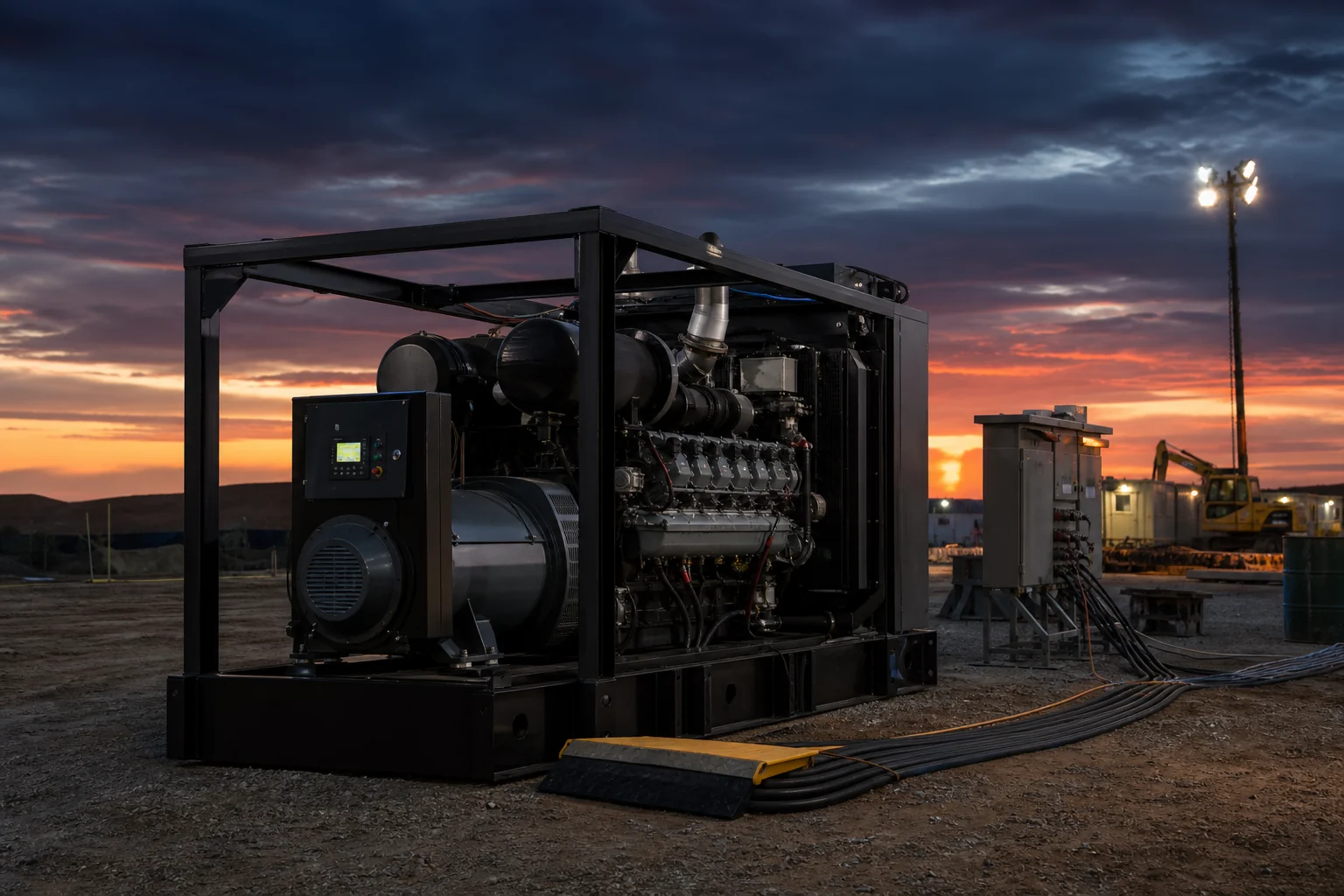



Prime and standby ratings describe how a generator may be applied. Selecting the larger printed number without reading its definition can leave a project with the wrong operating limits.
Ratings describe applications
Generator ratings connect equipment capability to an operating profile. ISO 8528-1 provides classifications intended to improve understanding between the manufacturer and customer, but a purchase still depends on the offered manufacturer's published definition. Standby, prime and continuous outputs may use the same engine family with different permissible load, duration and overload conditions.
A rating is not only a thermal maximum. It reflects expected loading and service life for the application. Using a standby rating for regular prime operation can exceed the intended duty even when the instantaneous load stays below the nameplate. Conversely, specifying prime duty for a short emergency application may add cost without solving the project's actual risk.
When standby duty applies
Standby generation is generally associated with power during failure of the normal source. The utility or another primary source is normally available, and the generator operates during outages, tests and maintenance events. The expected load may vary during an outage, but the set is not intended to replace the normal source as a routine economic operating mode unless the manufacturer explicitly permits it.
Define the emergency load, expected outage pattern and transfer sequence. Some facilities need only life-safety and essential loads, while others transfer most of the site. The generator must accept the planned steps and support the required duration. Fuel storage, automatic starting, battery condition and periodic testing often matter more to standby reliability than a small difference in nameplate output.
When prime duty applies
Prime generation is used where the generator is a primary power source for an extended period. Examples can include remote industrial sites, construction operations, rental service and locations without a reliable utility. The load may vary through the operating period. The supplier needs expected hours, average load, peak load, load steps and maintenance opportunities.
Prime does not mean unlimited operation at any load. The applicable definition may include average load limits, overload conditions or other restrictions. Read the data sheet and rating document for the offered set. If the site will run near constant high load for long periods, discuss whether a continuous rating or a different generator arrangement is required.
Load factor is part of the decision
Load factor describes average demand relative to the rating over a defined period. Two projects can run the same number of hours but impose different duties. A camp with large daily swings may have a moderate average load, while a process plant can remain near full output. Provide an operating profile instead of one maximum value.
Chronic light loading also deserves attention. A generator selected only for an occasional peak can spend most of its life far below an efficient operating range. Load management, multiple sets or a smaller unit with a planned peak strategy may offer a better fit. The correct choice depends on the offered engine and the site's operational priorities.
| Question | Standby review | Prime review |
|---|---|---|
| Normal source | Usually available | Generator is a main source |
| Operating pattern | Outages, tests and maintenance | Regular extended operation |
| Load information | Emergency sequence and duration | Average, peak and daily profile |
| Maintenance | Planned around readiness | Planned around operating hours and redundancy |
Do not compare unmatched numbers
A quotation may lead with the largest available value. Before comparing suppliers, align the rating, frequency, voltage, ambient conditions and power factor. Compare standby with standby and prime with prime. Check whether the engine and alternator model are identical across the quoted ratings and whether any derating applies at the project altitude or temperature.
Ask the supplier to state the governing rating definition and reference conditions. If a set offers an overload allowance under one rating, record when and how it can be used. Do not assume an overload percentage from another manufacturer or engine family. The contract should contain the selected operating rating, not only a marketing series range.
Consider system arrangement and redundancy
A rating decision also affects the number of generators. One large set may be simple, but it creates a single maintenance outage and may operate lightly during normal demand. Multiple sets can stage capacity, follow load and provide redundancy. They also require paralleling controls, switchgear, protection and a clear operating philosophy.
For standby systems, define whether one failed generator can be tolerated during a utility outage. For prime systems, define the load that must remain available while a unit is serviced. These questions establish N, N+1 or other redundancy requirements more clearly than asking for spare capacity. The answer should follow business and safety consequences, not a generic rule.
Write the rating into the project brief
State the normal source, generator role, expected annual hours, average load, maximum load, largest step and required redundancy. Include ambient temperature, altitude, voltage, frequency and load power factor. If the operating profile is uncertain, provide the best available scenarios and ask the supplier to show the selection impact.
The returned offer should name the standby, prime or continuous rating used, list the corresponding kW and kVA, and identify limitations. Review fuel, cooling, maintenance and warranty terms against the same duty. Once agreed, carry the rating definition into drawings, test documents and operating procedures so the site team does not unknowingly use the set outside its intended application.
- Normal power source and generator role
- Expected annual hours and operating schedule
- Average load, maximum load and largest step
- Required overload capability, if any
- Site ambient conditions and derating basis
- Redundancy and maintenance operating state
Write the duty statement before comparing ratings
A useful duty statement describes the source the generator supports, how often it is expected to run and whether the load changes. For utility backup, record the expected outage role, transfer arrangement, maintenance testing and any period when the set may support planned work. For a site without a reliable utility supply, describe daily operating hours, load profile, seasonal changes and the intended maintenance rotation.
Where several generators share load, state the normal number online, the reserve philosophy and what happens when one unit is unavailable. Parallel operation can improve service continuity, but each set still needs a rating suitable for the load it will carry. A sequence that repeatedly runs one unit near its limit while another remains lightly loaded may not match the duty the nameplate category was chosen to cover.
Send the same duty statement to every bidder and ask each one to identify the rating definition used on the proposed data sheet. Compare the stated operating limits, reference conditions, permitted load profile and maintenance requirements. This prevents two different rating categories from being presented as if they were equivalent offers.